KASA HOME
Rumors surface that the South Korean FA-50TH fighter jet is poised for real combat in the Thai -Cambodia conflict

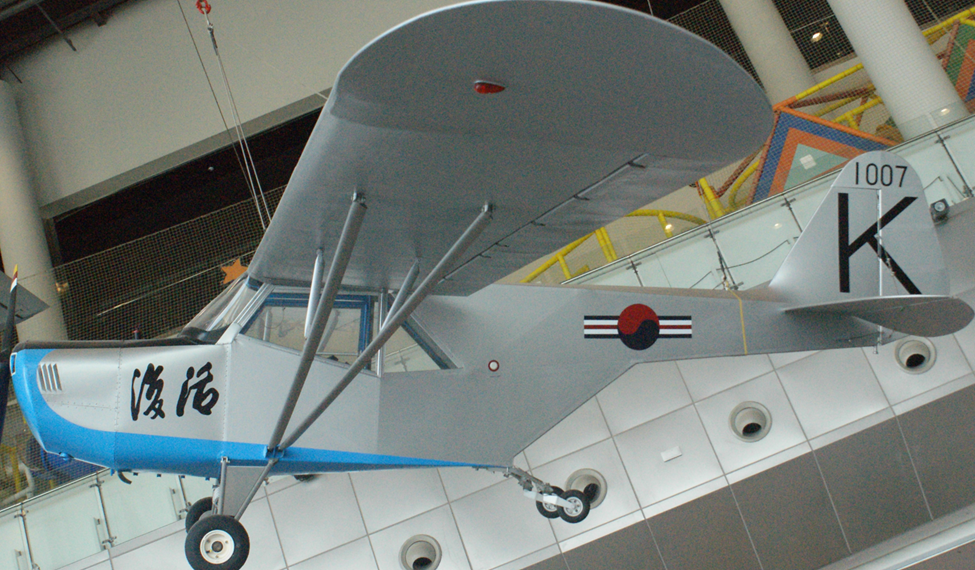
Every country’s aeronautical industry has to start somewhere. For South Korea, it was the unmistakably designed light aircraft, the BUHWAL. The design was led by the Republic of Korea Air Force (ROKAF) Technical School as a multi-purpose aircraft. It took to the skies for the first time in October of 1953, following the Korean War. The entire team consisted of a reported group of fewer than 30 people.
As the Korean War was nearing its end (June 25, 1950, to July 27, 1953), the 3rd Superintendent, Colonel Kim Seong-tae, of the Air Force Technical School, later renamed the 1st Air Force Logistics School, was instructed to have the school’s maintenance training unit envision, design, and manufacture a light, multi-purpose aircraft. There has been no exact date for when this order was given and ultimately began. However, the consensus is that, because Colonel Kim Seong-tae’s orders were given in June of 1953, this was the official start of the, as of yet, unnamed aircraft’s development. In fact, the name the aircraft project had been given was “New Domestic Aircraft”; this left room for the aircraft to be named at a later date.

As requested, the design was to be a multi-purpose aircraft. Duties were to consist of liaison duties, observation flights, and psychological warfare roles against North Korea.
Like all things military, there was a bigger purpose for having the aircraft designed, built, and maintained in Korea. Led by the head of maintenance, Major Lee Won-bok (李元馥), the bigger purpose for this aircraft was to create a research team and formulate experiments for the soldier-designers of the technical school, i.e., start creating an aeronautical team to allow South Korea, via the ROKAF, to begin the process of defending itself. Ultimately, the Air Force Technical School’s maintenance training unit, along with the instructors and assistants from the Air Force Technical School, was put together to form the group that would ultimately create the Buhwal. The official requirements for the aircraft itself, as laid out by the ROKAF, were as follows.
Design purpose:
- Must be easy to manufacture within South Korea
- Must be able to be used for Observations and communications
- Be convertible to either land or water-based operations
Its performance requirements were as follows:
Landing speed: 70-75 km/h 43-47 MP/h
Range: 300km appx 185 miles
Crew of two (Tandem)
Useable payload: 30kg or 66 lbs.
Excellent Downward looking visibility
And a rather unusual configuration of two tailwheels (The reason for this will be explained).
A total of 27 people were to join the team who members came with a very diverse mix of skills and disciplines.

The group included those who had studied engineering with knowledge of aeronautics. It also included individuals who had studied under the Japanese during Korea’s time of occupation, and aviation engineers who had been independently trained by the ROKAF/USAF. Some sources say that fourth- year students from both the Aeronautics Department at Seoul University and students from the Naval Architecture School (ROKNavy) were also involved, but I was unable to independently confirm that.
Sachon AFB was the chosen location for the aircraft’s ultimate development. As mentioned earlier, this was South Korea’s first attempt at aircraft development of any kind, and thus the team not only had a blank piece of paper in front of them, but they also had no supply chain, references to draw from, or companies to manufacture any parts that the aircraft would ultimately need. Thankfully, the tarmacs and scrap yards of South Korea were full of used US aircraft, ready for copying, usage, reverse engineering, and pilfering.
I’m sure the development crew was very grateful to the 6146th Air Force advisory group (USAF & ROKAF). To illustrate the resourcefulness of the group, the Buhwal has parts from the L4, L5, and L16, consisting of the engine, a Continental O-190-1 (C85-8FJ) rated at 85 HP, and landing gear. Also included in this list are many of its instruments, and a large portion of its actual flight control systems are directly from the aforementioned aircraft.
As mentioned, because the team had no resources to draw from or experience to lean on, they learned and adapted as they went. This was for two purposes: one, they were learning as they went; and two, they had to use what they could get. Thus, some of the cockpit was wooden and some was aluminum. (A large portion of the aluminum components was built using “Military Aid” aluminum). Massive credit must be given to this new aircraft development team. Formed in June of 1953, they had their little airplane flying by October 10th of the same year.
The one feature of this aircraft that any aircraft enthusiast will pick up on is the rear gear design. Not only is it short coupled (front and rear gear close together), but there are two tail wheels. Well, there are actually a few very good reasons for this: 1) One of the drawbacks of a conventional gear setup (tail dragger) is that it is very difficult to see forward when taxiing on the ground. Have you ever seen Warbirds at an airshow taxiing side to side? They do that because they can’t see forward on the ground very well. With the rear gear so far forward, the nose was more level to the ground, making it easier to see. 2) The aircraft was also designed to be water-based. So, with the dual gear setup in the back of the fuselage, there was a ready structural spot in the fuselage to secure the floats. 3) The area of the fuselage between the wheels was used for a door that was used for dropping leaflets and for the camera during observation flights.
You may have also noticed the aircraft’s number was 1007, a rather unusual number for military aircraft. Unlike most military aircraft numbers, this number had nothing to do with a unit, a plane number, or even a serial number. The number 1007 is/was not by chance either. The number 1000 is pronounced ‘Cheon’ in Korean, which has the same pronunciation as the last name of Lt. Cheon Bong-sik, the first ROKAF pilot to be shot down and killed in action. This incident occurred on September 1st, 1957, during the battle of Uiseong. The seven (of 1007) was added because the number 7 is a good luck number in South Korea. This would make the “Cheon chil (1007)” the first operational name of the aircraft and now serves as an unofficial memorial name.
Massive credit must be given to this new aircraft development team. Formed in June of 1953, they had their little airplane flying by October 10th of the same year. The first flight was at 10 AM and lasted a reported (but not official) 2 hours. It was flown by test pilot Major Min Yeoung-rak, with Major Lee Won-bok in the back seat. (Yes, a tandem plane flown from the front seat.)
Once airworthy, the aircraft was ordered by Air Force Brass to be moved to Dongmyeoung Airfield, where Second Air Force Chief of Staff Choi Yong-deok and Kim Shin, Director of Operations, made further test flights to continue the evaluation process.
On April 3rd of 1954, the official naming ceremony for the Buhwal was held at the Gimhae Air Force Base. South Korean President Syngman Rhee bestowed the name by personally painting the name BUHWAL in Chinese calligraphy on the aircraft.
Attending dignitaries also present included Vice President Ham Tae-young, Minister of National Defense Sohn Won-il, Chairman of the Joint Chiefs of Staff General Lee Hyung-geun, Air Force Chief of Staff Lieutenant General Choi Yong-deok, Navy Chief of Staff Lieutenant General Park Ok-gyu, Marine Corps Commandant Lieutenant General Kim Seok-beom, and Operations Director Brigadier General Kim Shin, along with other military personnel and senior U.S. military officers.

Also of note was the second ceremony of the day, where 27 citations were awarded to those who were involved with the development of the Buhwal, along with the ‘Hwarang Military Merit Medal’.
Additionally, ‘Public General Order 10’ medals were also awarded to Soldiers who participated in the project.
During the ceremony, the Buhwal also performed a reenactment of its test flight for the attending dignitaries.
While one search I conducted claimed three aircraft were built, officially only one, the 1007 was produced. I found no evidence for the other two.
After the naming ceremony was over the aircraft was moved to the Air Force’s Technical School until mid-1960, very little was recorded of its movements, and therefore little is known about what happened to the aircraft.
In October, it was transferred to the Korean Aerospace University (KAU). The KAU moved its campus to Goyang City, Gyeonggi-do, in 1963 and was renamed the Korean Aviation Junior College. Three years later, the school closed. About a year later, on the same site, the Gyeongsang Technical High School was opened. It is uncertain (the dates don’t line up), but one of the aforementioned schools listed dismantled the aircraft, severely damaging it in the process. It was then improperly stored and forgotten about for decades, as was the name ‘Buhwal’.
Fast forward to the 1980s, and writings from different scientists and others involved in the project began to circulate, gaining some attention in aviation and military circles.
Enter our hero, Lee Won-bok, supervisor of the original build of the Buhwal. His career and contributions to Korean aviation comprise a very long list. A short list of his contributions are as follows: apart from being part of the original design team, he also spent time being trained by the USAF Technical School from 1969 to 1988. In 1989, he took on the presidency of the Korean branch of the American EAA (Experimental Aircraft Association). He was also very active in other elements in the Korean aviation industry.
His desire to find his original creation, the Buhwal, was relentless. In 1999, a rumor came across his desk suggesting that the aircraft had been moved to the USA by the Air Force Military Advisory Group for testing and evaluation. That ended up being a dead end. Then another rumor that Cessna had gained possession of the Bohwal and used it as a base for the O-2 (military variant of the Skymaster 337). Again, as we now know, another dead end. 1999 also saw the ROKAF create a project to make a replica Bohwal based on photos, drawings, and Lee Won- bok’s personal involvement.
On March 25, 1999, the replica was put on display at the Air Force Academy Museum.
Fast forward to 2003, and with the buzz in the aviation community about the 100th Anniversary of flight (Wright Bros’ flight at Kitty Hawk, S.C., Dec 17, 1903) closing in, a JoongAng Ilbo reporter made a fateful move. He contacted Lee Won-bok about doing a story on the Buhwal, as South Korea’s part in helping celebrate aviation’s 100th anniversary.
The story ran on Dec 17th, and apart from the celebration of flight aspect of the story, the real reason for running it was to ask people for clues on what happened to the Buhwal. IT WORKED! Lee Bang-chi, former general affairs manager of the Gyeongsang Technical School (ret. 1974), revealed that the Buhwal was stored in the basement of the drafting room at the school.
January 13, 2004, was a happy day for South Korean aviation. A team that also included Moon Yong-ho (Sergeant 1st Class at the time), who was in charge of the sheet metal work on the aircraft back in 1953, found the Buhwal – dusty, its wings, engine, and gauges missing, and most of the fuselage just a skeleton. But the handwritten, partially peeled-away name on the nose was unmistakable. The Buhwal had been found.
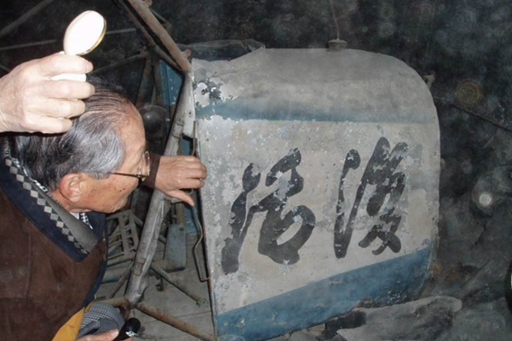
Having run the fishing-for-information story on Dec 17, on Jan 15, 2004, less than a month later, the JoongAng Ilbo ran a story notifying the world that the Buhwal had been found.
The ROKAF immediately began planning for the removal, recovery, and ultimate restoration of the Buhwal. The 81st Aircraft Maintenance Depot was chosen as the location for the restoration. (This is the same group that had built the replica Buhwal a few years earlier). As a tribute (I suspect) to the original group, 27 technicians were selected for the restoration. Due to concerns that the fragile original hand-painted letters would fall off before she was actually moved, a stencil was made of the lettering. Some rust removal and NDTs (non-destructive testing) were also done to ensure it was sound and safe to be moved.
The group removed the airframe from the school on June 9, 2004, and both Lee Won-bok and Moon Young-ho were there to witness the move. The removal of the aircraft was done entirely by hand to ensure she was treated as gently as possible.
Bringing her back to life.
A troublesome decision had soon to be made. Many, including the Buhwal’s creator, wanted the plane to be restored to flying condition. However, after a thorough inspection, the truth was undeniable: the airframe was no longer structurally sound enough to be safe for flight. To restore her to flying condition, almost none of the original aircraft would be left. So, the difficult decision was made to restore the aircraft with her original parts for display only.

The team had a lot of work in front of them. Apart from the meticulous cleaning that was needed just to start the project, they had to search second-hand markets, scrapyards, and aircraft graveyards to find the parts they needed to put the aircraft back to its original condition as closely as possible. The team did get lucky with a nearly similar engine donated by Seo Dong-hwa. The team was not without other challenges, such as small budgets and very tight timelines. In addition, incomplete planning and difficult research also snuck into the process, adding to their list of challenges. Despite their obstacles, not only was the aircraft rebuilt (not all parts were as original as they had hoped), but the team also managed to build a second replica Buhwal assumed for test fitting, is now on display at the War Memorial of Korea. Today, the original can be found at the Air Force Museum in Cheongju, and the replicas can be found at museums and airshows throughout Korea.
I think I have personally seen four of them to date.
Article Sources,
Wikifacts, WIKIPEDIA, general internet searches, museum visits and personal conversations.
Photographs:
Arnold Klappe,
wikimedia

FULL STORY
https://n.news.naver.com/article/003/0013603942

https://www.chosun.com/english/national-en/2025/11/03/3YZ3OR6JFNDUPHY56TCKJROXF4


DAL, KAL, AFR & KLM PURCHASE 25% OF WESTJET, THE DEAL CLOSED ON WEDNESDAY

DAL, KAL, AFR & KLM PURCHASE 25% OF WESTJET, THE DEAL CLOSED ON WEDNESDAY
https://onemileatatime.com/news/delta-korean-air-air-france-klm-invest-westjet/


full story at https://www.facebook.com/Boeing